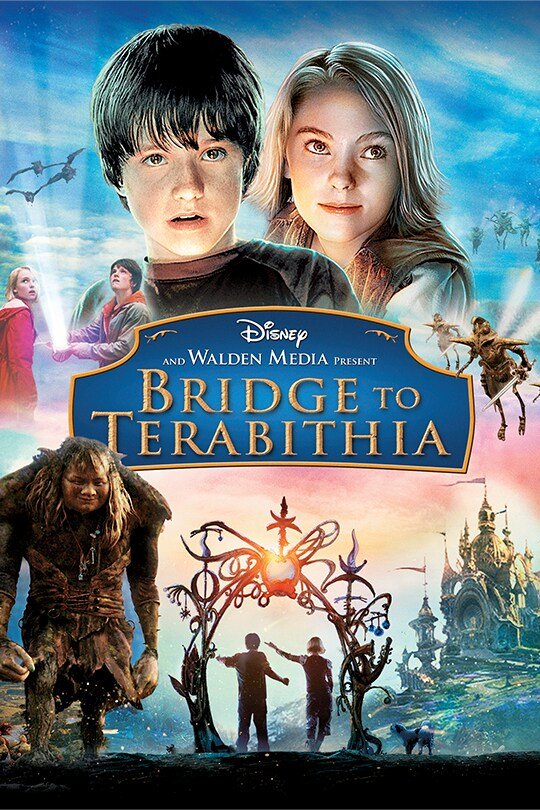
Released in 2007 and directed by Gábor Csupó, *Bridge to Terabithia* was marketed to audiences as a sweeping fantasy epic akin to *The Chronicles of Narnia* or *Harry Potter*. The trailers promised magical creatures, epic battles, and a wondrous kingdom waiting to be discovered. However, those who walked into the theater expecting a straightforward fantasy adventure were met with something far more profound, grounded, and ultimately devastating. Based on Katherine Paterson’s beloved 1977 novel, the film is a deeply moving exploration of childhood isolation, the transformative power of friendship, and the crushing weight of grief. It is a masterpiece of emotional storytelling that uses fantasy not as an escape from reality, but as a tool to confront it.
The story centers on Jess Aarons (played with remarkable sensitivity by Josh Hutcherson), a talented but introverted boy who feels alienated both at school, where he is bullied, and at home, where he is often overlooked in a crowded, financially struggling household. His life begins to change when a new girl, Leslie Burke (AnnaSophia Robb), moves in next door. Leslie is everything Jess is not: outgoing, fiercely imaginative, and unburdened by societal expectations. Despite their differences, the two form an immediate and profound bond. Together, they discover a secluded rope swing over a creek and use it to cross into the woods, where they create the imaginary kingdom of Terabithia.
In Terabithia, Jess and Leslie rule as King and Queen. The magical creatures they encounter—from the menacing Squogres to the giant trolls—are manifestations of their real-world anxieties and struggles. The bullies at school become the monsters they must defeat their fears are externalized into dragons and dark forces. This is where the film’s brilliance lies. The fantasy elements are not literal they are visual representations of the children’s active imaginations. The special effects, while charming, are intentionally secondary to the emotional core of the narrative. Terabithia is a coping mechanism, a safe haven where Jess and Leslie can process the complexities of growing up and find the courage they need to face their everyday lives.
AnnaSophia Robb’s performance as Leslie is a revelation. She brings a luminous energy to the screen, embodying the spirit of a child who refuses to let the mundane world crush her creativity. She teaches Jess how to open his mind, encouraging his artistic talents and showing him that there is beauty to be found even in the bleakest of circumstances. Their friendship is portrayed with a rare authenticity, devoid of the artificial drama often found in coming-of-age films. It is a pure, platonic love built on mutual respect and understanding.
The film’s most defining and shocking moment comes in its final act. (Spoilers ahead for a nearly two-decade-old film). When Jess goes on a spontaneous trip to a museum with his music teacher, Ms. Edmunds (Zooey Deschanel), he leaves Leslie behind. Upon his return, he is met with the devastating news that the rope they used to swing across the creek broke, and Leslie drowned. The suddenness of her death is jarring, and the film does not shy away from the visceral impact of grief. Jess goes through a harrowing emotional journey, grappling with denial, anger, and overwhelming guilt. He blames himself for not inviting her, and he struggles to reconcile the magical world they built with the harsh, unforgiving reality of her absence.
The final scenes of *Bridge to Terabithia* are some of the most poignant in modern cinema. Jess eventually returns to the creek and decides to build a literal bridge using lumber, ensuring that no one will ever have to rely on a frayed rope again. He brings his younger sister, May Belle, across the bridge, crowning her the new princess of Terabithia. In doing so, he honors Leslie’s memory and ensures that the magic they created together will live on. It is a heartbreaking yet ultimately uplifting conclusion that emphasizes the enduring impact of those we have lost.
*Bridge to Terabithia* is a rare film that respects the intelligence and emotional capacity of its young audience. It acknowledges that childhood is not always idyllic it can be fraught with pain, loneliness, and unimaginable loss. Yet, it also celebrates the resilience of the human spirit and the extraordinary power of imagination to heal our deepest wounds. It is a film that demands to be revisited, not just for its nostalgic charm, but for its timeless message about the importance of holding onto wonder in a world that so often demands we let it go. In the pantheon of children’s cinema, *Bridge to Terabithia* stands as a monumental achievement—a beautiful, tragic, and unforgettable journey into the heart of what it means to be human.