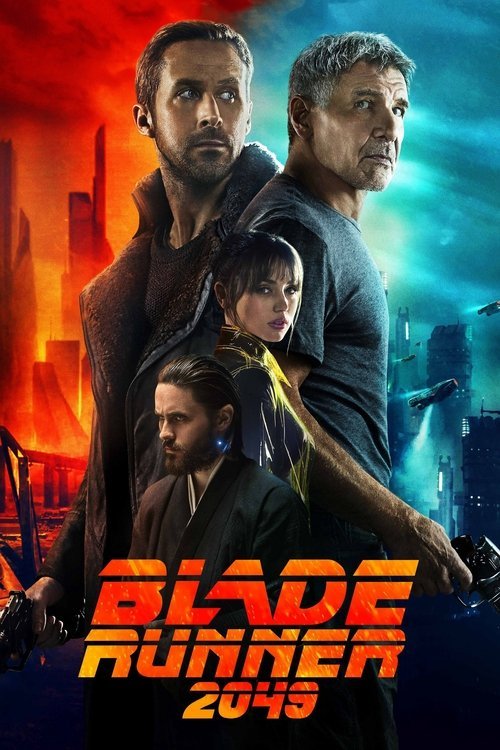
When it was announced that Denis Villeneuve would direct a sequel to Ridley Scott’s seminal 1982 classic, Blade Runner, the cinematic world was met with equal parts excitement and trepidation. How does one follow up a film that practically invented the cyberpunk aesthetic and posed enduring philosophical questions about the nature of humanity? The answer, released in 2017 as Blade Runner 2049, was a staggering achievement. It is a film that honors its predecessor while carving out its own distinct visual and thematic identity. Starring Ryan Gosling as ‘K,’ a replicant Blade Runner tasked with ‘retiring’ older models, the film expands on the world built by Scott, presenting a future that is even more desolate, beautiful, and heartbreakingly lonely.
The visual language of Blade Runner 2049, crafted by legendary cinematographer Roger Deakins, is nothing short of revolutionary. While the original film was defined by its claustrophobic, neon-soaked, rain-drenched streets, 2049 expands the scope to include sweeping vistas of ecological devastation. The dusty, radioactive orange hues of a ruined Las Vegas, the stark, brutalist architecture of the Wallace Corporation, and the oppressive, gray smog of Los Angeles create a world that feels both hyper-advanced and entirely broken. Deakins’ use of light and shadow is masterful, utilizing practical lighting, water reflections, and stark silhouettes to convey K’s internal isolation. The film is a masterclass in visual storytelling, where every frame could be hung in an art gallery.
Thematic depth is where Blade Runner 2049 truly excels. The film delves deeply into the nature of memory, the definition of a ‘soul,’ and the human need for connection. K is a replicant who knows exactly what he is he harbors no illusions of humanity. Yet, his relationship with Joi (Ana de Armas), an artificial intelligence hologram designed to be the perfect companion, raises profound questions. Can a love between two artificial beings be considered real? The film posits that the capacity to love, to sacrifice, and to feel pain are the true markers of a soul, regardless of whether one is born or manufactured. K’s journey from a compliant, soulless tool to an individual capable of independent moral choice is a powerful exploration of agency.
Harrison Ford’s return as Rick Deckard is handled with surprising emotional weight. Unlike many legacy sequels that rely on cheap nostalgia, Deckard’s presence in 2049 is earned and vital to the narrative. He is a broken man, living in exile, haunted by the past. The dynamic between Gosling’s K and Ford’s Deckard provides the film with its emotional climax, a quiet realization of sacrifice that resonates long after the credits roll.
Denis Villeneuve proves himself to be a master of pacing and atmosphere. Blade Runner 2049 is a slow burn it is deliberate, methodical, and unafraid of silence. The haunting score by Hans Zimmer and Benjamin Wallfisch, echoing Vangelis’s original work while adding its own oppressive, synthetic textures, perfectly complements the film’s somber tone. It is a cinematic experience that demands patience but rewards the viewer with unparalleled beauty and philosophical richness.
In an era dominated by fast-paced superhero blockbusters, Blade Runner 2049 stands as a testament to the power of contemplative, adult-oriented science fiction. It is a masterpiece of modern cinema, a film that explores the profound tragedy of a synthetic existence while simultaneously celebrating the fragile beauty of what it means to be alive.