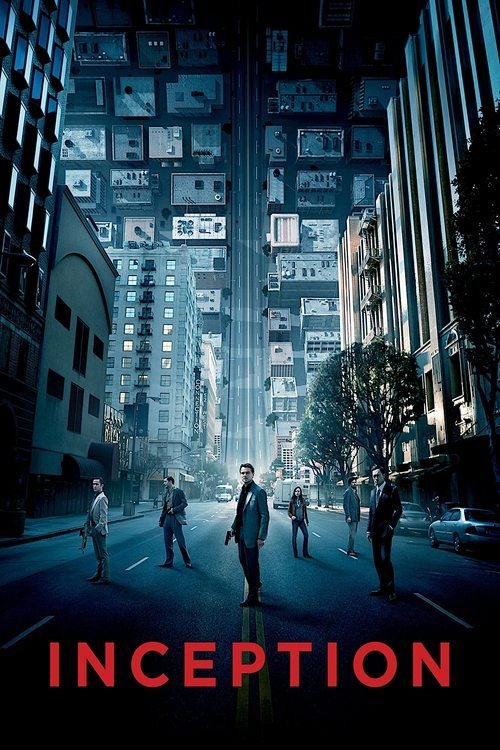
Christopher Nolan’s Inception (2010) stands as one of the most ambitious and intellectually stimulating blockbusters of the 21st century. Blending the high-stakes thrills of a heist movie with the mind-bending concepts of science fiction, the film takes audiences on a journey not across space or time, but into the deepest layers of the human subconscious. The concept of ‘dream sharing,’ a technology originally developed for military training, is hijacked for corporate espionage. Dom Cobb, played with grounded intensity by Leonardo DiCaprio, is an ‘extractor’—a specialized thief who steals secrets from the minds of his targets while they sleep. However, Cobb is a flawed hero, burdened by the tragic loss of his wife, Mal (Marion Cotillard), whose projection constantly sabotages his missions.
The narrative complexity of Inception is a hallmark of Nolan’s filmmaking. Rather than confusing the audience with abstract imagery, Nolan establishes strict rules for his dream world. Time dilates exponentially with each deeper layer of the dream state. A few minutes in reality translates to hours, days, or even years in the dream. This mechanical precision allows the film to balance four concurrent timelines during its climax, culminating in a spectacular synchronization of ‘kicks’—the physical jolts required to awaken the dreamers. It’s an editorial marvel, edited by Lee Smith, that maintains tension across multiple layers without losing narrative coherence.
Visually, Inception is a triumph of practical effects over CGI. The famous rotating hallway sequence, where Arthur (Joseph Gordon-Levitt) engages in a zero-gravity fistfight, was achieved using a massive centrifuge built on a soundstage. This commitment to practical filmmaking gives the dream worlds a tactile, grounded reality that computer-generated imagery often lacks. Similarly, the Parisian café that explodes in slow motion and the brutalist snow fortress were largely practical, ensuring the film’s aesthetic ages gracefully.
Hans Zimmer’s iconic score, built around a slowed-down version of Edith Piaf’s ‘Non, je ne regrette rien,’ serves as the auditory connective tissue for the film. The booming brass notes (often referred to as ‘BRAAAMS’) became a cinematic staple for the next decade, though rarely used with the same thematic resonance. The music acts as a timer, a warning, and a motif for Cobb’s lingering guilt.
At its core, Inception is a film about grief and letting go. Cobb’s true journey is not the inception of an idea into Robert Fischer’s (Cillian Murphy) mind, but the catharsis he must achieve to forgive himself for his wife’s death. The ending, featuring the spinning top, remains one of the most debated conclusions in film history. Does the top fall? Is Cobb awake, or is he still dreaming? Nolan’s refusal to answer this directly forces the audience to confront the film’s ultimate theme: reality is subjective, and what matters most is the emotional truth we choose to accept. Cobb leaves the top spinning and goes to his children he has found his reality, regardless of what the physical world dictates.
In conclusion, Inception is a rare cinematic achievement that treats its audience with intellectual respect while delivering unparalleled spectacle. It challenges viewers to engage actively with its narrative while providing an emotional anchor in Cobb’s tragic backstory. Its influence on pop culture and modern filmmaking is undeniable, securing its place as a modern masterpiece.