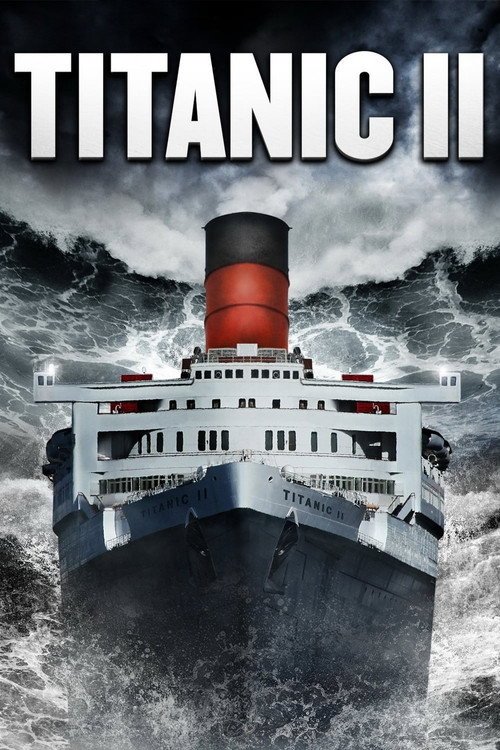
When discussing modern disaster cinema, it is impossible to ignore the prolific output of The Asylum, a production company famous for its ‘mockbusters’—low-budget films designed to capitalize on the marketing campaigns of major Hollywood releases. However, occasionally, The Asylum produces a concept so audacious, so inherently captivating, that it transcends its mockbuster origins to become a cult phenomenon in its own right. Such is the case with Titanic II (2010), a film written, directed by, and starring Shane Van Dyke. It is a movie that boldly asks the question: What would happen if we built an exact replica of the ill-fated RMS Titanic and sailed it along the exact same route, one hundred years later? The answer, unsurprisingly, involves a lot of ice, a lot of screaming, and a surprising amount of genuine entertainment value.
The premise of Titanic II is delightfully straightforward. To commemorate the 100th anniversary of the original Titanic’s maiden voyage, billionaire playboy Hayden Walsh (Shane Van Dyke) constructs the ‘Titanic II,’ a state-of-the-art luxury liner designed to be identical to the original but equipped with modern technology. The ship embarks on its maiden voyage from New York to Southampton (the reverse of the original route), filled with wealthy socialites and eager tourists. However, global warming has caused a massive glacier in Greenland to collapse, sending a devastating tsunami—and a fleet of massive icebergs—hurtling across the Atlantic directly into the path of the Titanic II.
What follows is a race against time as the crew and passengers struggle to survive a disaster that feels both tragically ironic and terrifyingly inevitable. While James Cameron’s 1997 epic focused heavily on the romance between Jack and Rose, Titanic II places the disaster front and center. The film does not linger on sweeping romances or class divides instead, it jumps straight into the action. Once the tsunami hits and the icebergs begin to tear into the ship’s hull, the pacing rarely lets up. The film relies heavily on the frantic energy of its cast as they navigate flooding corridors, failing electrical systems, and collapsing infrastructure.
Shane Van Dyke pulls triple duty as the writer, director, and lead actor, and his commitment to the material is commendable. As Hayden Walsh, he begins the film as an arrogant billionaire but slowly transforms into a reluctant hero as the reality of the disaster sets in. He is joined by Marie Westbrook, who plays Amy Maine, a nurse aboard the ship and Walsh’s former love interest, and Bruce Davison as James Maine, Amy’s father and a Coast Guard captain who desperately tries to mount a rescue operation. Davison, a seasoned character actor, brings a level of gravitas to the film that helps ground the more outlandish aspects of the plot.
One of the most fascinating aspects of Titanic II is its approach to the disaster itself. The film makes a concerted effort to differentiate its catastrophe from the original sinking. By introducing a tsunami caused by global warming, the film attempts to inject a modern environmental message into the narrative. Furthermore, the mechanics of the sinking are altered rather than slowly taking on water after a glancing blow, the Titanic II is battered by a tsunami and crushed by ice, resulting in a much more chaotic and rapid descent into the ocean. The visual effects, while constrained by a limited budget, are utilized effectively to convey the sheer scale of the destruction.
It is easy to dismiss a film like Titanic II based solely on its title and its origins. However, doing so would be to miss out on a remarkably earnest piece of B-movie filmmaking. The film does not attempt to parody the 1997 classic, nor does it treat its subject matter as a joke. It takes its absurd premise completely seriously, and that sincerity is precisely what makes it so engaging. It is a disaster film in the truest sense, relying on the primal fear of the ocean and the inherent drama of a sinking ship to drive its narrative forward. The sheer audacity of the concept, combined with the frantic pacing and committed performances, ensures that there is never a dull moment.
In conclusion, Titanic II (2010) is a film that demands to be watched with an open mind and a sense of fun. It is a prime example of the ‘so bad it’s good’ phenomenon, a movie that overcomes its budgetary limitations through sheer ambition and unrelenting energy. Whether you are a fan of disaster movies, a connoisseur of B-cinema, or simply looking for a wildly entertaining way to spend an evening, Titanic II delivers an unforgettable voyage. It is a testament to the enduring appeal of the Titanic mythos and a bold, unapologetic entry into the annals of cinematic disasters.